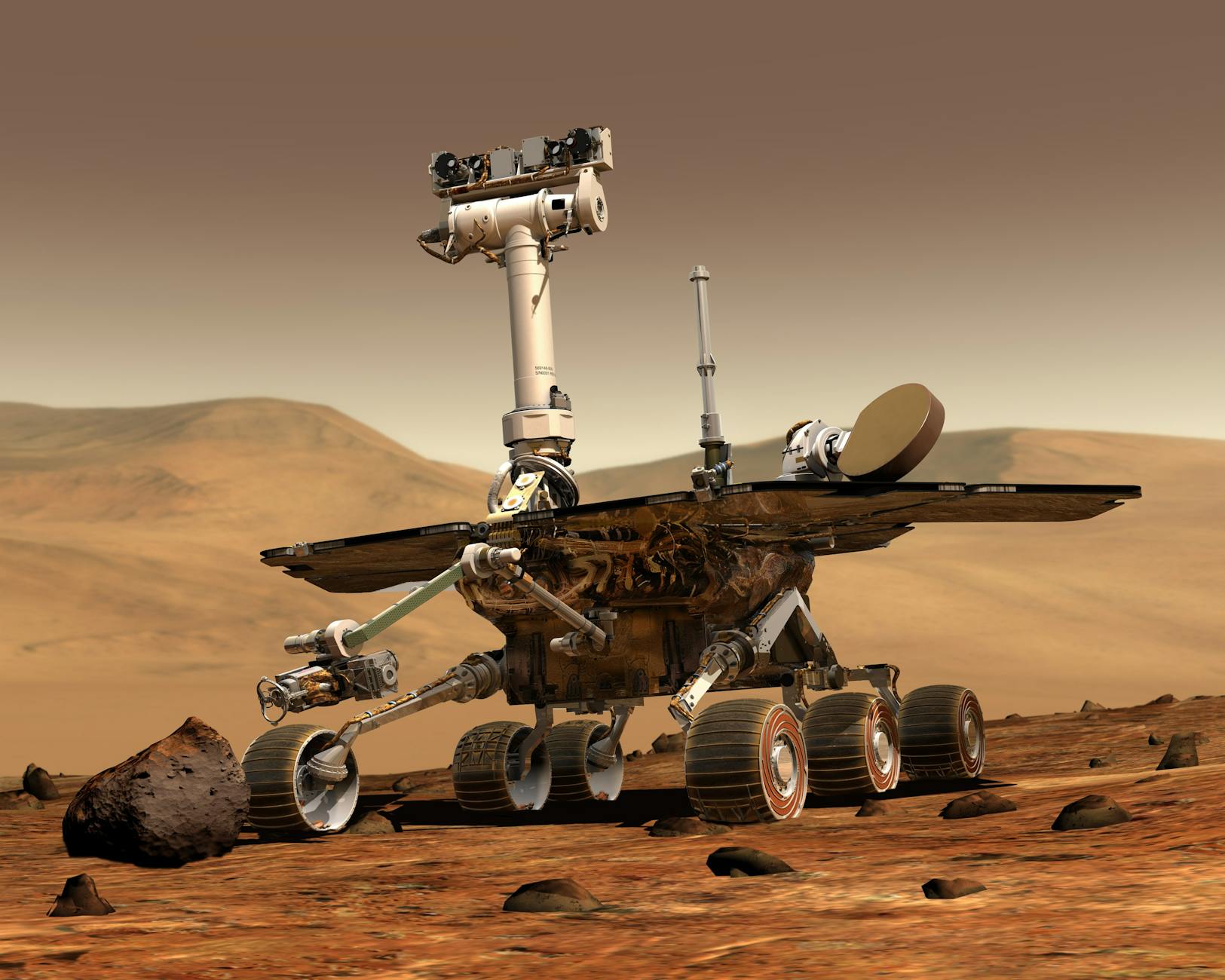
Scientists Discover Mars Rocks May Actually Be Rocks, Prompting Existential Crisis in Astrobiology Community
Landmark study of 847 Martian surface formations reveals "troubling pattern" of geological objects behaving exactly like geology.
By Theo Pappas
Science & Society Desk
A new paper that is already drawing attention from the astrobiology community suggests that many formations previously interpreted as potential signs of life on Mars may, in fact, be rocks that are simply existing as rocks. The study, which examined 847 high-resolution images from NASA's Perseverance rover over a period of eighteen months, appears to suggest that the Red Planet's surface is consistent with the possibility of being composed primarily of geological materials.
"What makes this finding particularly striking is the implications for how we understand pattern recognition in extraterrestrial environments," said Dr. Helena Voss, Associate Professor of Xenobiological Skepticism at the Max Planck Institute for Interplanetary Geology. "We may have been systematically misinterpreting mineral formations as biological structures simply because they appear in photographs." The research team identified what they describe as "an alarming tendency" among scientists to attribute lifelike characteristics to objects that could be explained through conventional planetary formation processes.
Dr. Marcus Chen, a researcher in Computational Pareidolia Studies at Cambridge University who was not involved in the study, offered an even more concerning perspective. "This suggests we may have fundamentally overestimated our ability to distinguish between living and non-living matter when observing it from 140 million miles away," Chen told reporters. "The implications for the entire field are staggering." The findings come at a time when NASA's astrobiology programs are facing increased scrutiny over their methodology for identifying potential biosignatures.
"The real question," Voss told me, "is whether we've been looking for life on Mars, or whether Mars has been teaching us something uncomfortable about the limits of human perception."
Share this article
Theo Pappas
Science & Society Desk, The Daily Fab
Theo Pappas covers science, technology, and society for The Daily Fab. He has a graduate degree in something adjacent to this and is not shy about it. He dislikes writing about geology.
More in Science
Study Confirms Disease Monitoring May Actually Require Monitoring Disease
By Theo Pappas · May 31, 2026
Scientists Discover Cruise Ship Quarantine May Actually Require Understanding What Quarantine Does
By Theo Pappas · May 30, 2026
WHO Director Discovers Disease Outbreaks May Actually Require Director to Visit Places Where Disease Is Outbreak-ing
By Theo Pappas · May 29, 2026