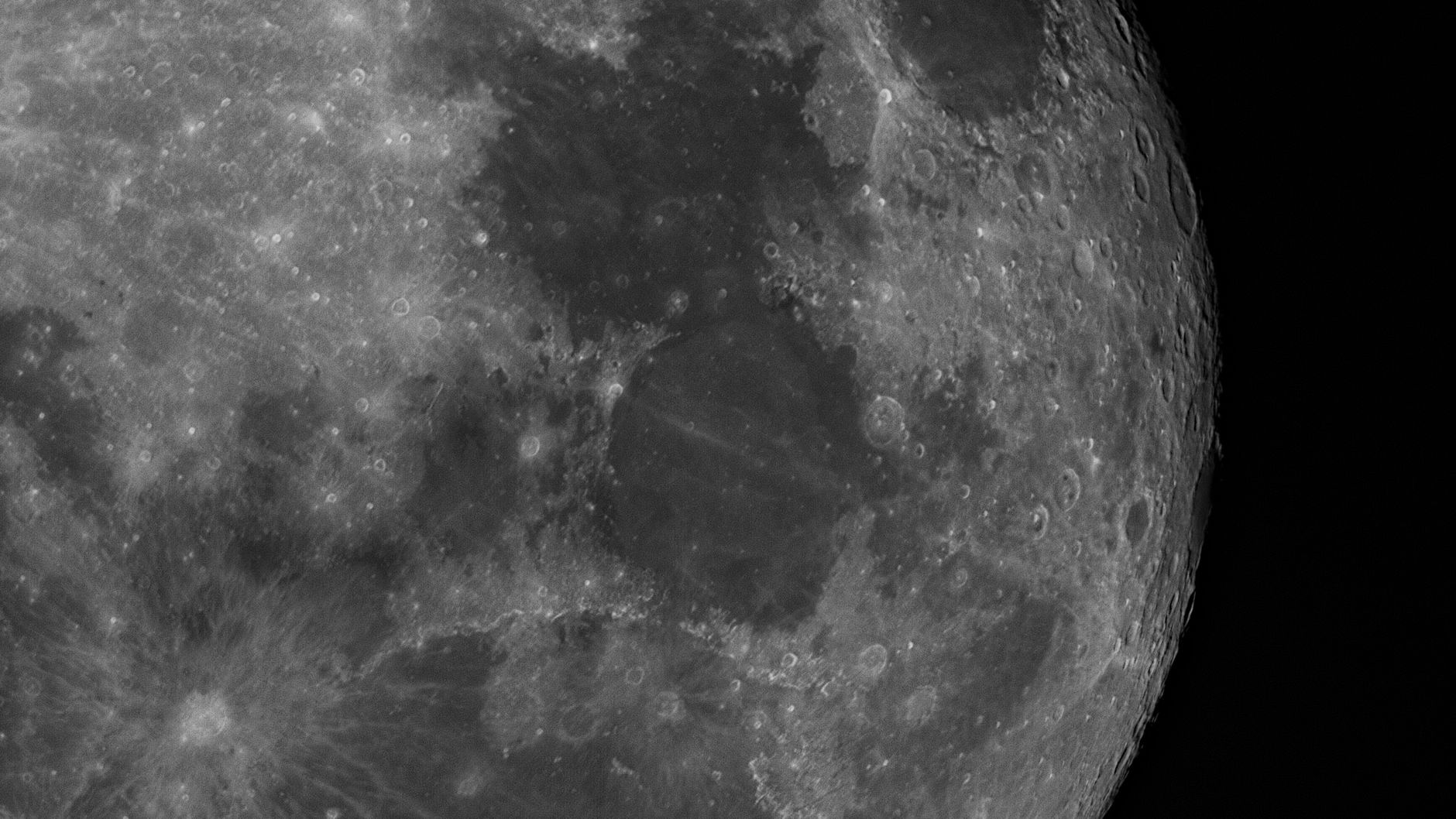
Scientists Discover Moon Debris May Actually Require Moon to Accumulate Debris
Landmark study of 17 lunar impact sites suggests celestial littering could be consistent with the possibility of littering.
By Theo Pappas
Science & Society Desk
A new paper that is already drawing attention from the international space community has confirmed that the accumulation of human-made objects on the lunar surface may actually require a surface on which objects can accumulate. The study, which examined 17 crash sites over a period of eighteen months, appears to suggest that the Moon's gravitational field is behaving exactly as physics predicted it would.
"What makes this finding particularly striking is the consistency with which debris appears to remain wherever we put it," said Dr. Elena Vasquez, Professor of Orbital Sociology at the Delft University of Technology. "We're seeing a clear pattern where objects launched at the Moon tend to stay on the Moon, which could have profound implications for our understanding of how launching things at celestial bodies works."
The research, conducted by an international team of astronomers not involved in the actual launching of objects at the Moon, suggests that the lunar surface may be accumulating approximately one crashed spacecraft per mission that crashes a spacecraft into it. Dr. James Wickham, Chair of Gravitational Anthropology at Cambridge University, told reporters that this rate of accumulation is "consistent with the possibility that things we throw at the Moon don't simply disappear."
The implications of these findings extend far beyond lunar science, according to researchers. A spokesperson for the European Space Agency, who asked to remain anonymous, confirmed that the agency is now "actively investigating whether other planets might also retain objects that are deliberately crashed into them."
"The real question," Vasquez told me, "is whether we've been fundamentally misunderstanding what happens when you throw garbage into space. Are we the litterers, or is space the litter?"
Share this article
Theo Pappas
Science & Society Desk, The Daily Fab
Theo Pappas covers science, technology, and society for The Daily Fab. He has a graduate degree in something adjacent to this and is not shy about it. He dislikes writing about geology.
More in Science
Study Confirms Disease Monitoring May Actually Require Monitoring Disease
By Theo Pappas · May 31, 2026
Scientists Discover Cruise Ship Quarantine May Actually Require Understanding What Quarantine Does
By Theo Pappas · May 30, 2026
WHO Director Discovers Disease Outbreaks May Actually Require Director to Visit Places Where Disease Is Outbreak-ing
By Theo Pappas · May 29, 2026