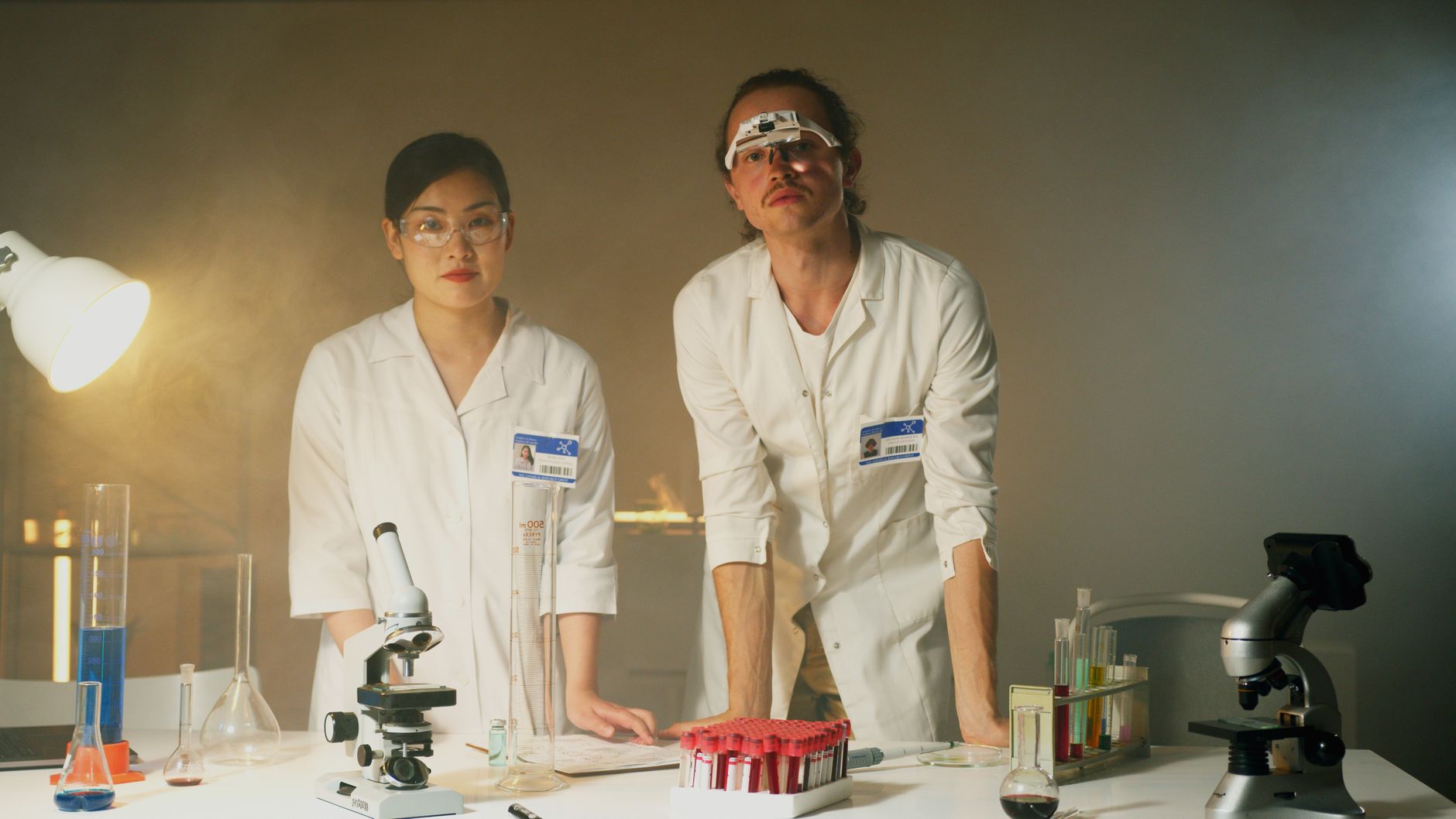
NASA Scientists Confirm They Have Been Guessing This Whole Time, Express Surprise at How Well It Worked Out
Agency admits decades of space exploration based on 'educated hunches' and 'seeing what happens.'
By Theo Pappas
Science & Society Desk
A landmark study conducted by NASA's own internal review board has revealed that the space agency's scientists have been making educated guesses for the entirety of the organization's 65-year history, with researchers expressing genuine amazement that any of their missions succeeded at all.
The study, which examined 847 mission reports over a period of eighteen months, found that NASA personnel consistently employed what Dr. Miranda Kowalski, Professor of Applied Speculation at the California Institute of Theoretical Certainty, describes as "sophisticated approximation methodologies." The findings suggest that landmark achievements including the moon landing, Mars rover deployments, and International Space Station construction were accomplished through what internal documents refer to as "really hoping for the best."
What makes this finding particularly striking is the apparent consistency with which NASA's guesswork aligned with actual physics. "We'd run the numbers, cross our fingers, and launch a billion-dollar satellite into the void," said Dr. James Chen, Senior Director of Hopeful Mathematics at NASA's Jet Propulsion Laboratory. "The fact that most of our stuff didn't explode was honestly as surprising to us as anyone else." Dr. Rebecca Torres, Chair of Confident Uncertainty Studies at MIT and not involved in the study, noted that the implications may extend beyond aerospace engineering to "basically every field where people pretend to know what they're doing."
"The real question," Kowalski told reporters, "is whether the American public would have preferred we admit we were winging it from the beginning, or if they're comfortable with the results we achieved through decades of institutional improvisation."
Share this article
Theo Pappas
Science & Society Desk, The Daily Fab
Theo Pappas covers science, technology, and society for The Daily Fab. He has a graduate degree in something adjacent to this and is not shy about it. He dislikes writing about geology.
More in Science
Study Confirms Disease Monitoring May Actually Require Monitoring Disease
By Theo Pappas · May 31, 2026
Scientists Discover Cruise Ship Quarantine May Actually Require Understanding What Quarantine Does
By Theo Pappas · May 30, 2026
WHO Director Discovers Disease Outbreaks May Actually Require Director to Visit Places Where Disease Is Outbreak-ing
By Theo Pappas · May 29, 2026