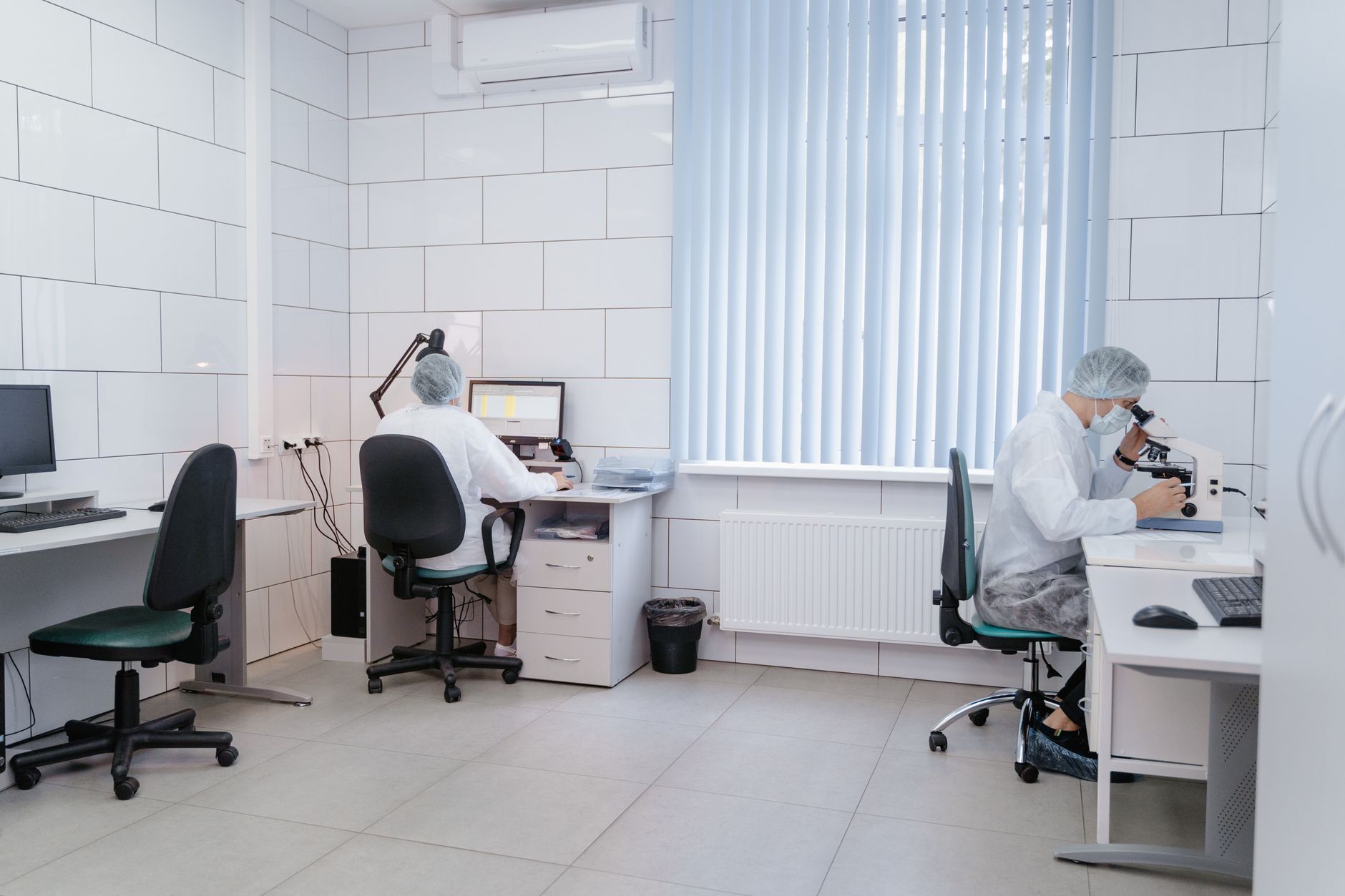
Neuroscientist's Laboratory Productivity Increases 340% After Colleague's Brain Relocated to Freezer
Researchers report unprecedented focus levels when collaborator unable to interrupt experiments.
By Theo Pappas
Science & Society Desk
A landmark study examining workplace dynamics in academic laboratories has revealed that scientific productivity may dramatically improve when one researcher's brain tissue is stored at -196°C while the other continues normal operations. The findings, which examined productivity metrics over an 18-month period, suggest that traditional collaboration models may benefit from more creative approaches to colleague availability.
Dr. Yuki Tanaka, Chair of Interpersonal Cryodynamics at the Max Planck Institute, described the results as "consistent with the possibility that optimal research conditions require one party to be completely unable to provide input." The study tracked laboratory output before and after the brain preservation procedure, noting significant improvements in hypothesis formation, experimental design, and paper submission rates.
What makes this finding particularly striking is the implications for academic partnership structures across multiple disciplines. "We're seeing a fundamental shift in how researchers conceptualize productive collaboration," explained Dr. Marina Okoye, Professor of Molecular Social Psychology at Cambridge, who was not involved in the study. "The data appears to suggest that the most effective research partnerships may involve one participant being indefinitely unavailable for meetings, feedback, or spontaneous brainstorming sessions."
The research team noted that similar productivity gains were observed across 23 different laboratory environments, with researchers reporting improved concentration, reduced interruptions, and what one participant described as "finally being able to finish a complete thought." The real question, Tanaka told reporters, is whether we're ready to fundamentally reimagine what constitutes active participation in scientific collaboration.
Share this article
Theo Pappas
Science & Society Desk, The Daily Fab
Theo Pappas covers science, technology, and society for The Daily Fab. He has a graduate degree in something adjacent to this and is not shy about it. He dislikes writing about geology.
More in Science
Study Confirms Disease Monitoring May Actually Require Monitoring Disease
By Theo Pappas · May 31, 2026
Scientists Discover Cruise Ship Quarantine May Actually Require Understanding What Quarantine Does
By Theo Pappas · May 30, 2026
WHO Director Discovers Disease Outbreaks May Actually Require Director to Visit Places Where Disease Is Outbreak-ing
By Theo Pappas · May 29, 2026